
Ensuring the safety, stability, and long-term integrity of your future home through comprehensive soil and ground investigation.
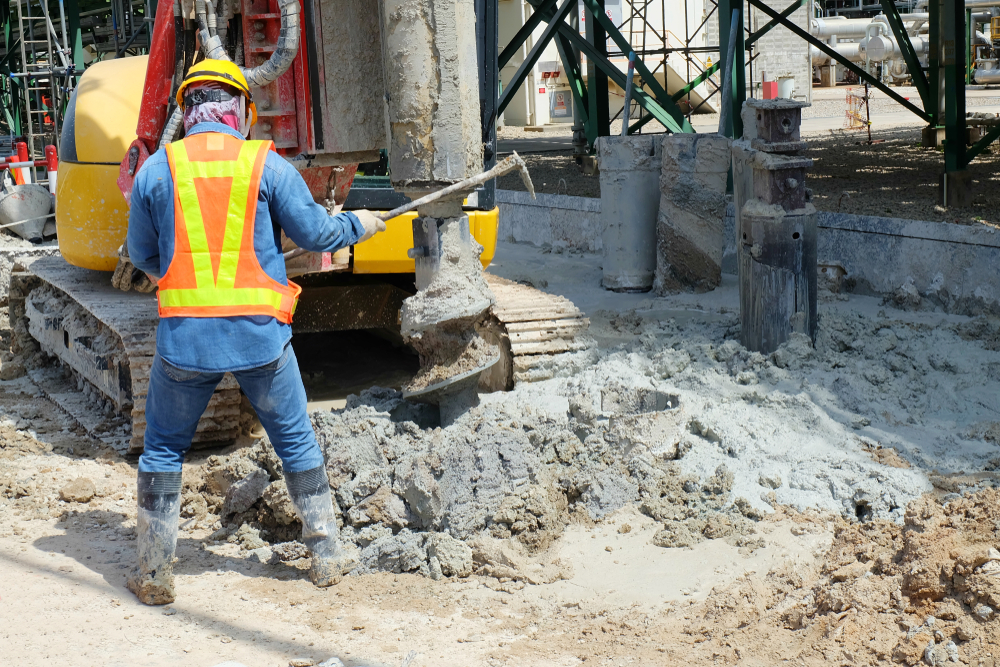
Geotechnical analysis for a residential project is a crucial process that involves a comprehensive investigation of the soil and ground conditions of a building site. The goal is to ensure the safety, stability, and long-term integrity of the future home.
A proper geotechnical report provides essential information for engineers, architects, and builders to design a suitable foundation and mitigate potential risks.
Expert analysis for safer construction and long-term structural integrity
This preliminary stage involves reviewing existing information about the site, such as geological maps, past reports, and aerial photographs. The goal is to get a basic understanding of the site's history and potential issues.
This is the on-site phase where a geotechnical engineer or technician gathers detailed data. Common methods include borehole drilling, test pits, and in-situ testing like Standard Penetration Test (SPT) or Cone Penetration Test (CPT).
The collected soil and rock samples are sent to a lab for detailed analysis. This includes tests to determine soil classification, moisture content, plasticity, shear strength, and compaction characteristics.
A comprehensive report is prepared based on the findings from the field and lab tests. This document includes a summary of geological conditions, detailed soil profile, analysis of potential hazards, and foundation recommendations.
Geotechnical analysis is particularly important for residential projects to identify and address potential problems that could lead to structural damage and costly repairs.
Certain types of clay soils expand when they absorb water and shrink when they dry out. This constant movement can cause foundations to heave and crack, leading to significant damage to the structure.
If the soil is too soft or unstable, it may not be able to support the weight of the house. This can cause the foundation to settle unevenly, resulting in cracks in walls, floors, and ceilings.
A shallow groundwater table can cause a variety of problems, including basement flooding, hydrostatic pressure on foundations, and a weakening of the soil's strength.
Building on or near a sloped area without proper analysis can lead to landslides, soil erosion, or foundation failure.
In areas prone to earthquakes, some soils (typically loose, saturated sand) can lose their strength and behave like a liquid during seismic shaking. This can cause a structure to sink or tilt.
If a site was previously used for a different purpose and filled with loose or unsuitable material, the ground may not be stable enough for a new structure. A geotechnical analysis can determine the depth and quality of the fill.
A geotechnical report is not just a regulatory requirement (which it often is for building permits); it is a critical tool for informed decision-making and risk management.
The report provides the data needed to select and design the most appropriate foundation system, whether it's a shallow foundation (e.g., slab-on-grade) or a deep foundation (e.g., piles or piers).
By identifying potential problems early, a geotechnical report helps builders and homeowners avoid unexpected costs and delays during construction.
It ensures the house is built on a solid, stable base, protecting the long-term value and safety of the property.
A thorough analysis and a well-designed foundation provide peace of mind that the home is protected from common geotechnical hazards.
Our geotechnical experts are ready to analyze your site and provide the insights needed for a safe, stable construction.
Contact Our Geo-Tech Team